
Finding Guilford County Residents
Start with the record that matches what you know. A full address works best in the county property listing. A full name plus a birth year can narrow the North Carolina voter search. A past address belongs in a city directory or deed trail. These sources answer different questions, so a match in one record should be checked against another before treating it as the right person.
Owner, voter, deed party, and directory occupant are different roles. The property card can identify an owner of record, while a historic directory may place a household at an address in a specific year. Neither one is a complete list of everyone who is there now.
- Search the Guilford Real Property Listing by full address, owner name, or parcel number.
- Use the parcel number, situs address, mailing address, and legal description as separate clues.
- Confirm a name through NC Voter Search or the court portal when the source and date fit.
- Trace a transfer in the Register of Deeds search, then turn to library directories for a past household.
- Ask the actual custodian for an existing record when the online index stops.
Guilford County Records Offices
Guilford County keeps the most useful local trail in three places: Tax for a present parcel, the Register of Deeds for recorded land instruments, and Elections for voter-file access. The Clerk of Superior Court holds case, estate, special-proceeding, and divorce files. Each office has a different record scope, access route, and correction process.
Guilford Register of Deeds
201 W. Market St.
Greensboro, NC 27401
336-641-7556
Guilford Board of Elections
Registration, history, and statistics requests
Guilford County, NC
336-641-6875
Guilford County Property Search Fields
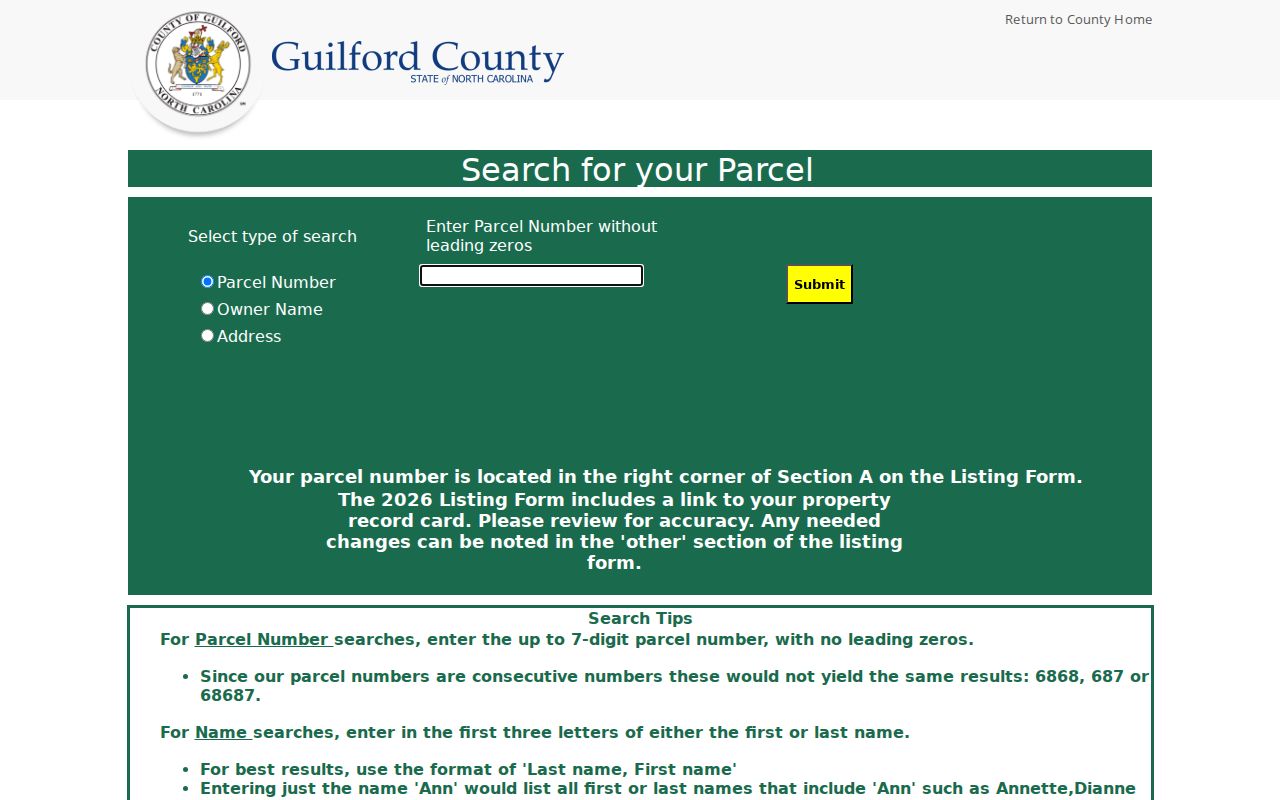
The property listing is the clearest first stop for an address or an owner. It accepts Parcel Number, Owner Name, or Address. The county advises using a full address such as 515 Smith St, because a number-only search can catch 515, 5515, and 5153. For a name, Last, First is the most precise pattern. A comma with no first name searches last name only.
| Guilford field | How the county describes it |
|---|---|
| Parcel Number | Up to seven digits, with no leading zeroes. |
| Owner Name | Enter the first three letters of a first or last name; Last, First works best. |
| Address | Use the first three street letters or three address digits; a full address narrows the result. |
| Property card | The 2025 listing links to a record card; exact card labels require a live check. |
The property-search screen is shown below. Its search choices are useful for a current owner trail, not for proving who occupies a home.
Save the parcel and legal description before moving to a map or deed. Those fields survive typed-address differences better than a street label alone.
Guilford County's Deed Trail
Guilford says its first land record was filed May 4, 1771, and its current index and images reach from the original records forward. A grantor is the person or entity conveying property. A grantee is the recipient. Search the current owner as grantee, read the seller and legal description in that instrument, then repeat with the seller as grantee for an earlier transfer.
The web deed form is JavaScript-driven, so its complete field list was not visible during research. The county still confirms the historical index, office access, and the usefulness of book, page, document, and legal-description clues. Older material may require office books or Greensboro Public Library deed microfilm.
The Guilford deed-index portal is the starting point for that document trail.
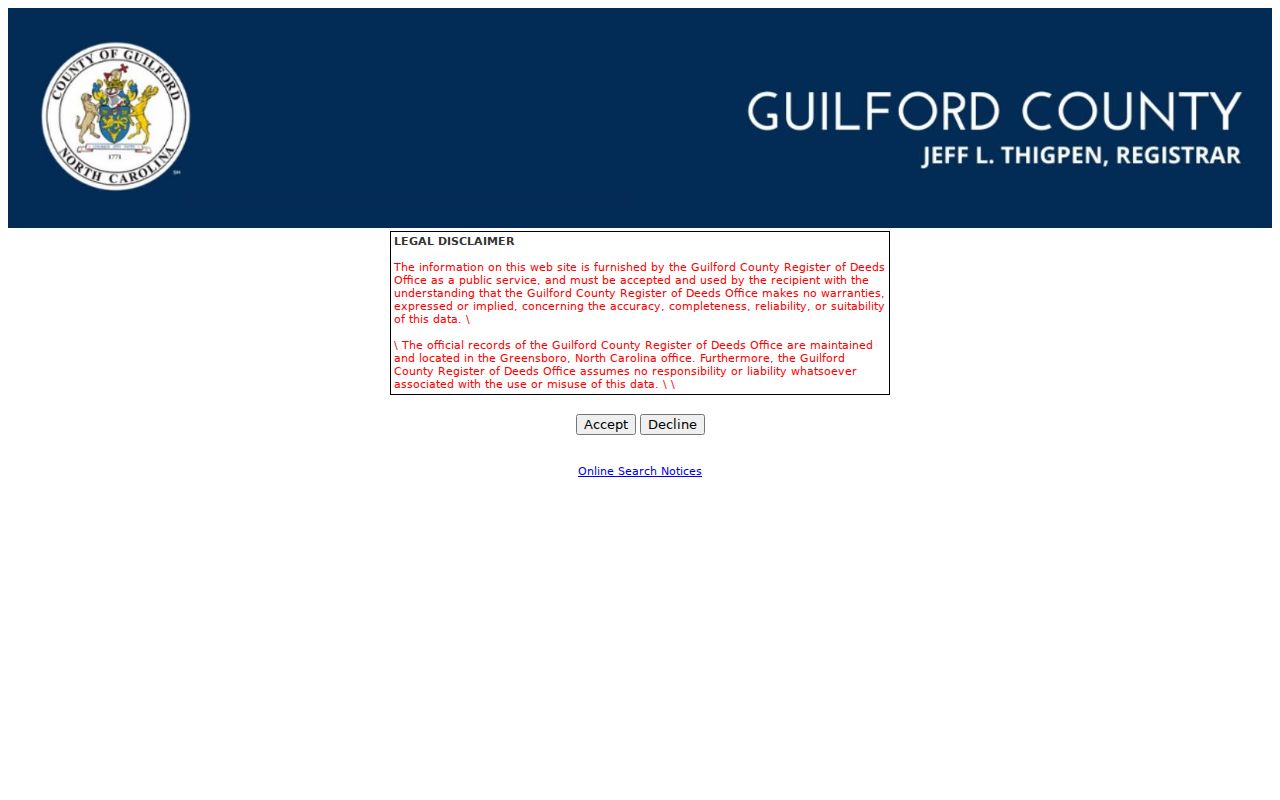
Digitization of an index book finished in February 2006, but an old web system once focused on 1982-forward records. Treat a missing online result as a reason to ask the Register or library, not as proof that an older book is gone.
Current Guilford County Resident Sources
There is no single official roster of all Guilford County residents. A current name can appear in a property, voter, court, business, or civic record for a particular purpose. Check the date and scope before combining results. A public record may locate an owner, a registered voter, a party to a case, or an officeholder without describing every person in a household.
| Guilford source | What it can establish | Custodian | Access path |
|---|---|---|---|
| Property listing | Owner of record, situs, mailing address, parcel | Tax Department | Free owner, address, or parcel search |
| Voter records | Registration status, precinct, and public voter fields | State and county elections | Name lookup or authorized data request |
| Recorded instruments | Grantors, grantees, dates, legal descriptions | Register of Deeds | Portal, office, and microfilm |
| Court files | Party role, case information, and disposition when public | Clerk of Superior Court | eCourts and courthouse terminal |
| Historic directories | Past household address and occupation | GPL, GHM, and HRC | Scans, microfilm, and local-history desks |
When the goal is one person rather than a location, compare separate dated records without turning one hit into an identity claim.
Guilford County Voter Search Limits
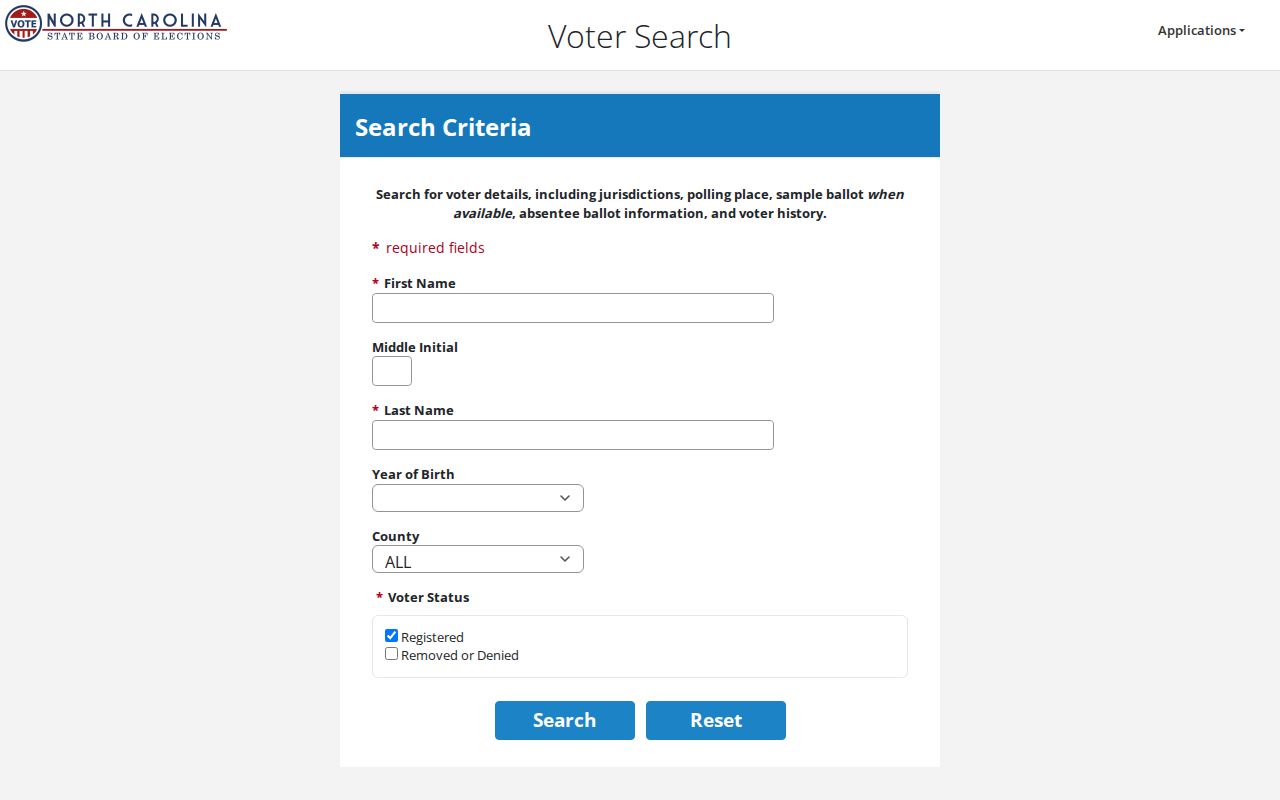
NC Voter Search asks for first name, last name, an optional middle initial and year of birth, an optional county, and one or more Registered, Removed, or Denied status choices. Selecting Guilford narrows a statewide name. Results can include jurisdictions, polling place, ballot information when available, absentee information, and voting history.
The state voter file has public categories, but it does not expose a full date of birth, driver-license or ID number, Social Security number, or signature image. Registration status is an election-record label. It does not confirm that a person is physically present at an address today.
The North Carolina voter lookup shows the name-driven route.
For a full file or statistical request, Guilford Board of Elections estimates seven to ten business days. Current statewide files update weekly, but protected data remains protected.
Guilford County Court and Vital Checks
NC eCourts is statewide and has been live in all 100 counties since October 13, 2025. Smart Search supports party name, business name, case number, court location, date, status, and case-type filters. A wildcard search needs at least three last-name letters plus an asterisk. The public portal can be useful for a party or estate trail, while the clerk keeps the local file and copy route.
Vital records have a different access rule. Guilford Register of Deeds issues local birth, death, and marriage copies, while the Clerk handles divorce judgments and NC Vital Records provides statewide products. Certified copies are entitlement-limited. A state search has a $24 nonrefundable fee per three-year period; a local certified birth, death, or marriage copy is listed at $10.
The North Carolina vital-record order information explains the event facts and ID a qualifying request needs.
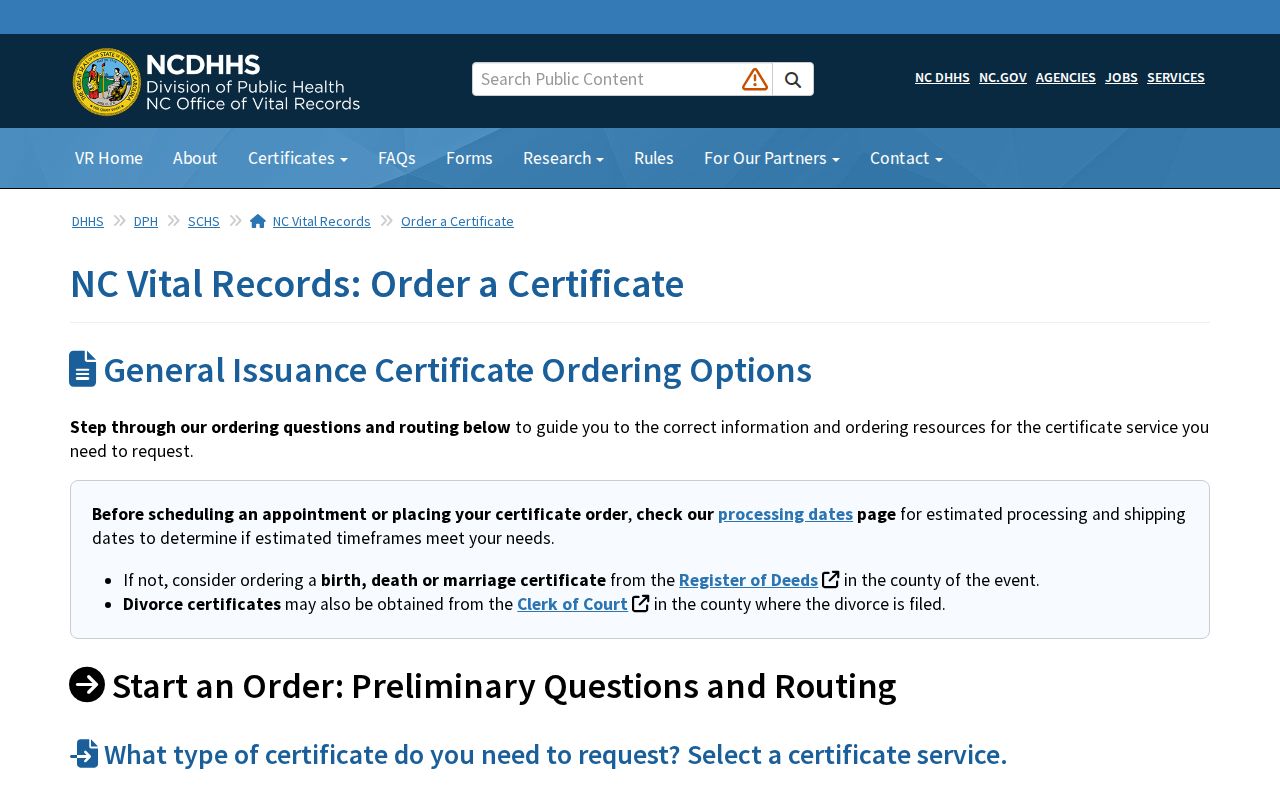
A certificate or court result needs its own date and scope check. It can confirm an event or party role, not automatically a current address.
Guilford County Records Terms
These short labels help keep the sources straight. The property system and historic collections use some of the same words, but they point to different kinds of evidence.
- Parcel
- A county identifier for a piece of real property, often a steadier match than a typed street address.
- Situs address
- The physical property location. It differs from the mailing address used for a tax bill.
- Index
- A finding tool that points to a record. It is not always the image or certified copy itself.
- Criss-cross directory
- A reverse directory arranged by address, used to find a historical occupant after an address is known.
Guilford County's Address Geography
Guilford is a two-city, multi-town county. A Greensboro, High Point, Kernersville, or other postal label does not settle the municipal or county-service question. County GIS records postal community, incorporated or unincorporated community, and public-safety geography separately. On some road segments, the left and right sides can carry different postal or municipal fields.
Start with the parcel, then compare its site address, ZIP, municipality, and road data. The detailed address chain belongs on the Guilford County by-street directory page, where the parcel and road tools are kept in their proper order.
Historical Guilford County Directories
Greensboro's directory run begins with 1879/80 and extends through 1982 with gaps. Greensboro History Museum, UNCG Digital Projects, Greensboro Public Library, and Digital Greensboro provide scans or shelves for different years. High Point has its own historical path: its first directory was 1908, with printed runs from 1910 to the present at the High Point Heritage Research Center.
A directory can tie a name, occupation, and address to one year. Compare nearby years, then pair a volume with a released federal census and an obituary, cemetery, deed, or probate record. The full collection and entry-reading method is on the Guilford County city directories page.
Guilford County's 1887 Directory
The Greensboro Public Library preserves an 1887 directory focused on African-American residents. Its entries can contain a name, occupation, and residence notation. The period's spelling, abbreviations, and segregation-era organization need to be read as part of the record, not erased. The library's abbreviation key includes h for house, r for rooms, and wid for widow.
The Guilford Slave Deeds project is another historic people index, documenting 254 deeds from 1774 to 1826 involving people sold as property before the Civil War.
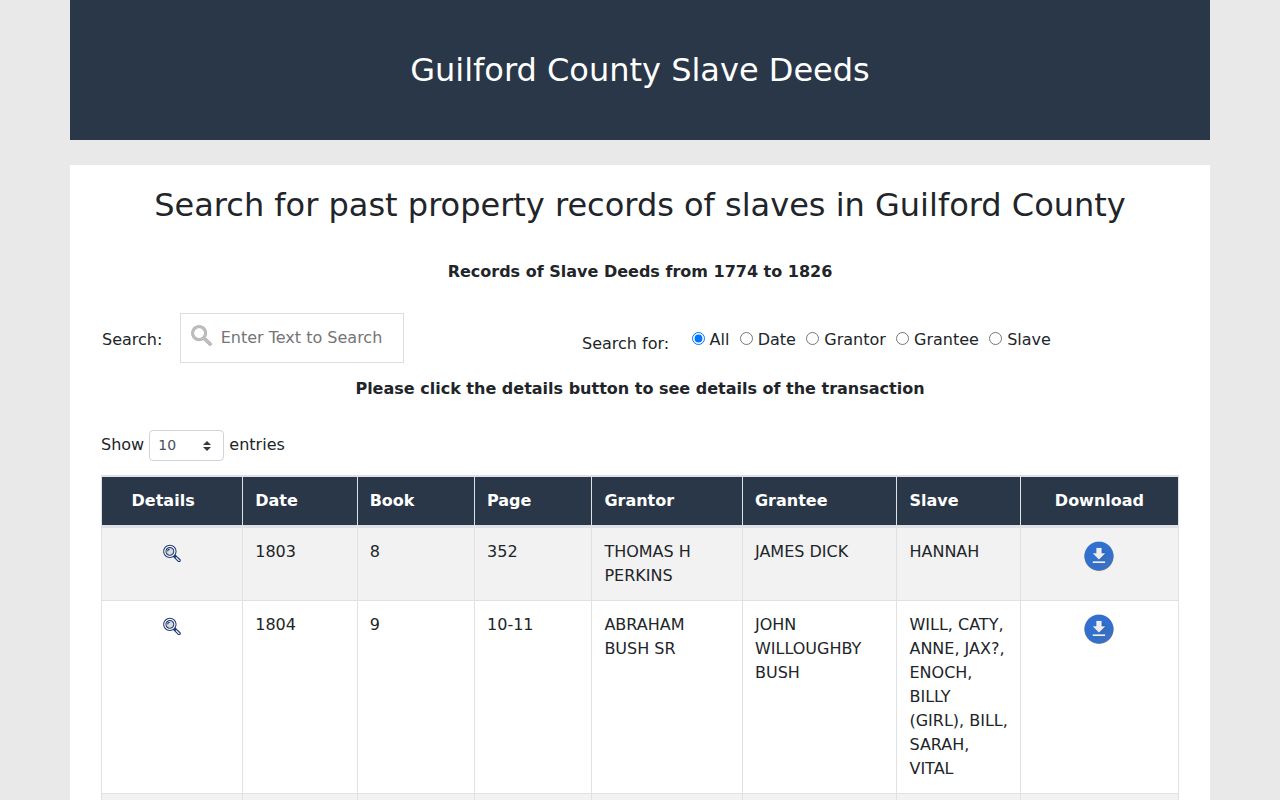
It is historical documentation, never a shortcut for a current-resident search. The directory, cemetery, court-transcription, and land records together provide a more honest trail where original records are incomplete.
Guilford County Records Requests
North Carolina Public Records Law, N.C.G.S. Chapter 132, generally allows inspection and copies of public records. A custodian may need time to locate and review material, and is not required to create a new analysis or answer an open-ended research question. Ask for an existing record type, date range, and field rather than a custom list of people.
The North Carolina Public Records Law supplies the statewide framework.
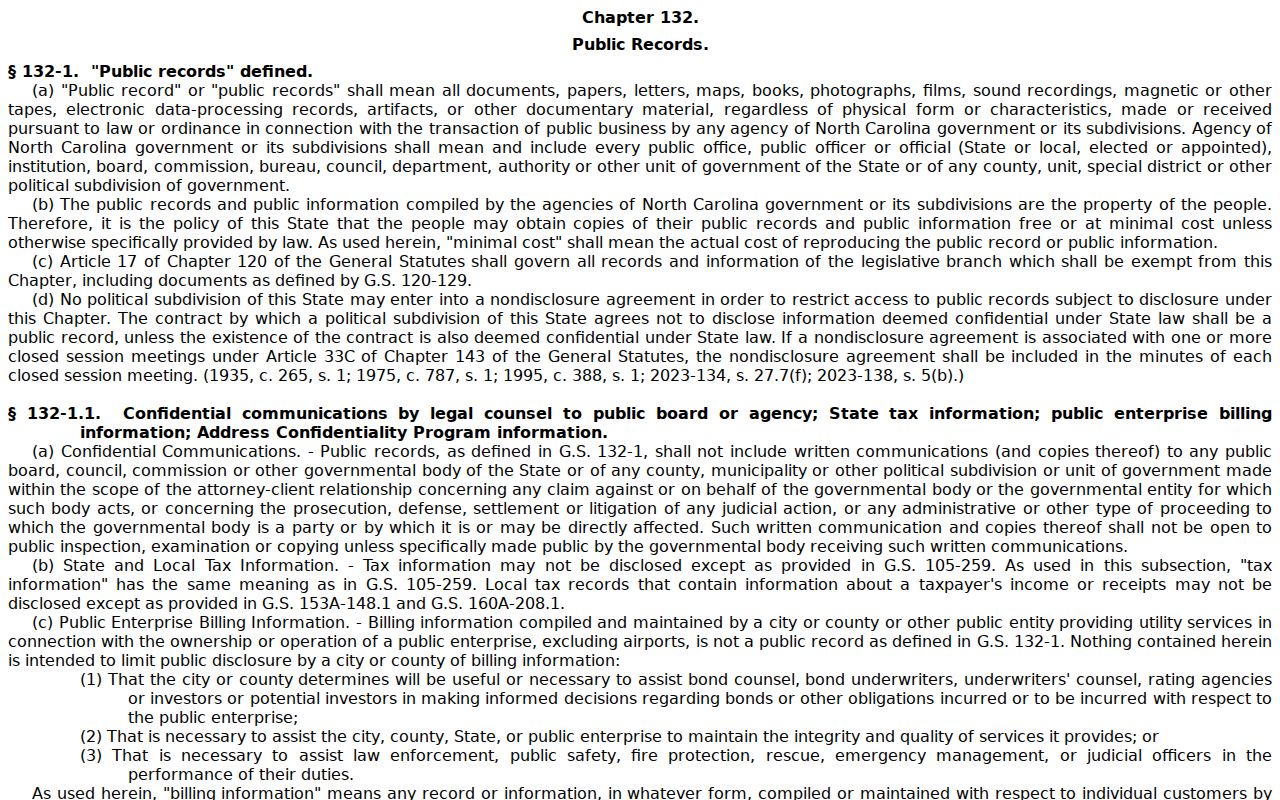
Greensboro's request form asks for contact information, preferred delivery, a subject, and a detailed description, then sends a tracking number. Court, vital, deed, and elections records each retain their own request or copy rules.
Guilford County Library Desks
When a county portal has no answer, the local-history route has several distinct doors. Greensboro Public Library's genealogy collection has printed and microfilmed directories, family histories, published genealogies, Guilford Genealogical Society pedigree charts, newspaper clippings, obituary and cemetery sources, and local databases. Its Central Library hours listed for the collection are Monday through Thursday 9 a.m. to 9 p.m., Friday and Saturday 9 a.m. to 6 p.m., and Sunday 2 p.m. to 6 p.m.
Greensboro History Museum Archives keeps directories, maps, newspapers, and printed materials, with appointments recommended. High Point Heritage Research Center adds High Point directories, telephone books, newspapers, and family materials. The Genealogical Society's research-facilities page connects those collections with State Archives, State Library, and university projects. Call before a visit, ask for the specific year or record group, and use a library or archive record as dated historical evidence rather than a current household list.
Guilford County Privacy Boundaries
Public does not mean unlimited. Chapter 132 protects certain identifying information, and North Carolina voter law protects full birth dates, driver-license and ID information, Social Security numbers, and signature images. The federal Driver's Privacy Protection Act restricts DMV personal information. Certified vital copies and sealed or juvenile court material have separate limits.
The NC Address Confidentiality Program can shield actual home, school, and work addresses for eligible participants. Direct a possible protected record to its custodian rather than trying to work around a confidentiality rule.
Guilford County Name Cross-Checks
A name match becomes more useful when its date, address, role, and source agree. Compare initials and spelling variants. Distinguish a property situs from a mailing address, a voter status from physical presence, and a deed party from an occupant. The county's tax transfer office can update ownership-name metadata after an eligible change, while the Register can correct an index error but not rewrite a defective original instrument.
Commercial finder products may combine public and marketing data, but they can merge same-name people, lag corrections, and carry stale addresses. Official records remain the better source for a fact that needs confirmation.
Guilford County Business Records
A business record can help explain a name connected with an address, but it does not establish who lives there. The North Carolina Secretary of State business search covers corporations, LLCs, assumed names, agents, officers, filings, and status. It is an interactive search, and the state describes its weekly business data separately from the public search. An officer, registered agent, or filing address is a role in an entity record, not proof of a current household connection.
For an occupational credential, NCBOLD is an entry point to the issuing North Carolina board. Check the individual board's own record because public fields and verification rules vary. A license result can identify a licensed person or status where the board publishes it, but it needs a name, date, and other independent record before it supports a personal-history conclusion. The same caution applies to a filed business address, which may be a service address or agent address.
Keep the source type visible in your notes. Parcel, deed, court, voter, business, and license records each describe a different official relationship. That makes a later correction or follow-up request much easier to direct to the right custodian.
Guilford County Access Updates
Online links deserve a fallback plan. Guilford's Register of Deeds warns that services may be slow during County IS/I3 Verticals work. The North Carolina Board/License Online Database can help locate an issuing professional board, but its public result fields vary by board.
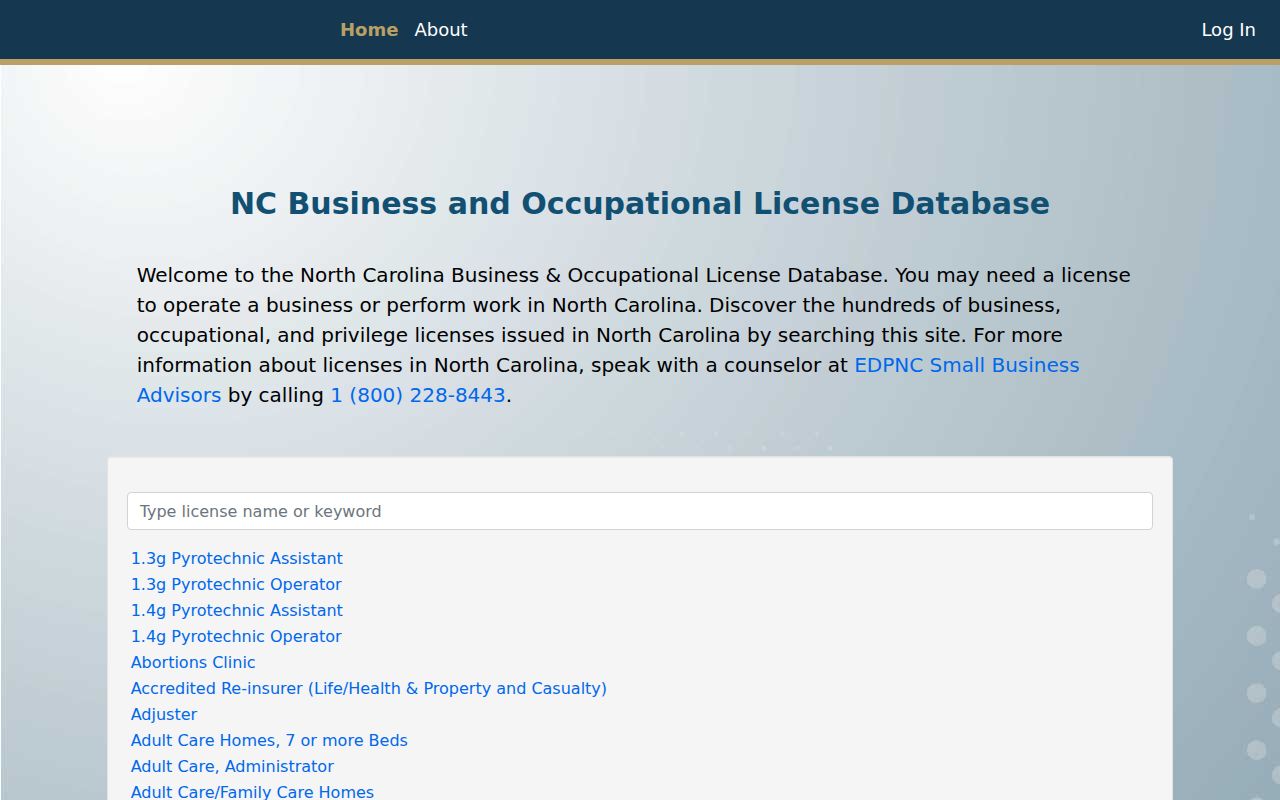
For an unclaimed-property name lead, the North Carolina unclaimed-property page routes users to NCCash. A claim process is separate from evidence of current residence.
When a portal is unavailable or a record needs a certified copy, use the office, clerk terminal, library microfilm, or archive route documented by the custodian.